AI-Native Teams: Why They’re the Future of Work
Team Design and Culture
Enterprise AI Strategy
Jul 21, 2025
Published on July 21, 2025 – by Code & Conscience
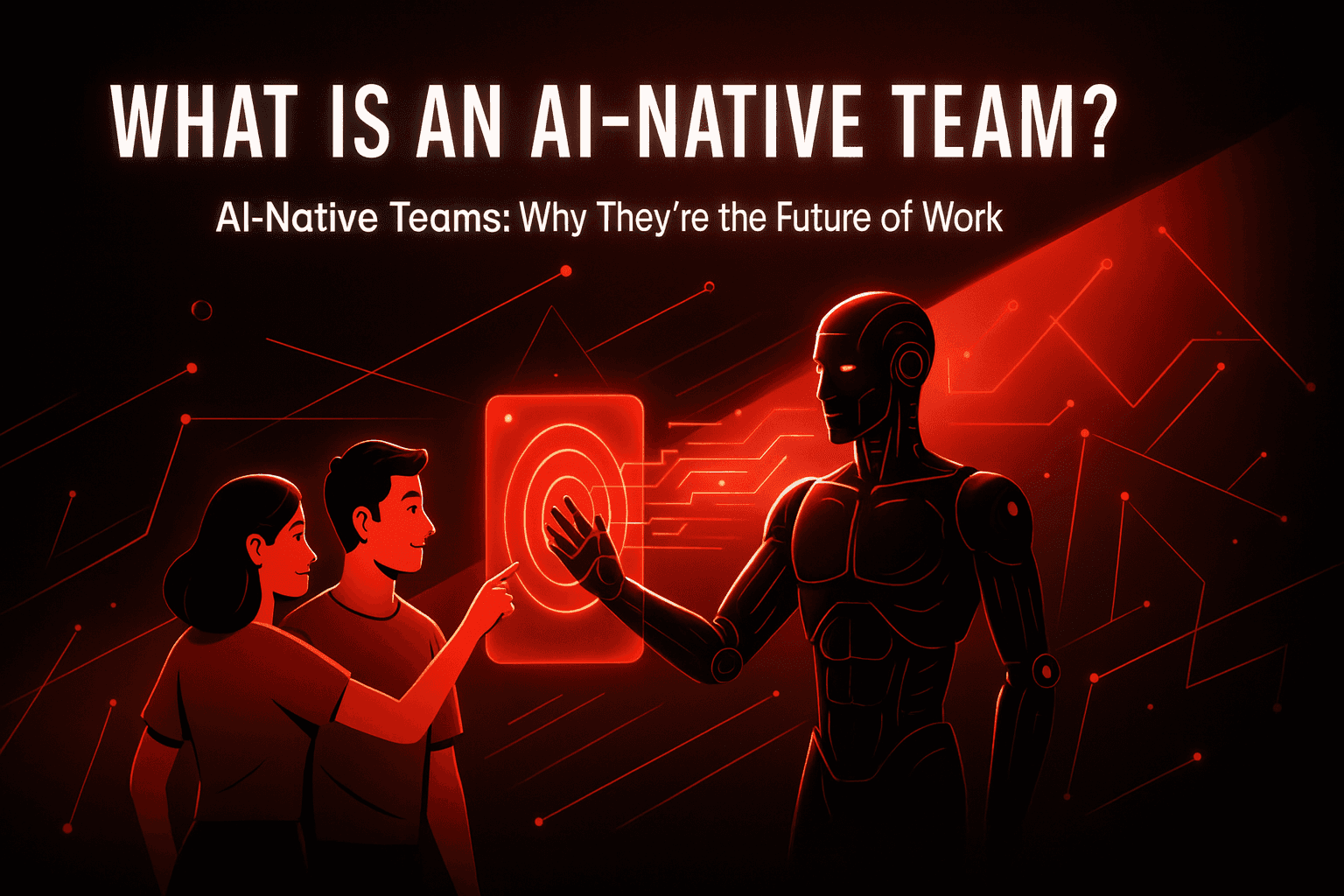
For decades, leaders scaled results by adding people. That equation no longer holds. The question is not how many hands you can hire. It is how well your teams pair human judgment with machine leverage to move faster, learn faster, and raise the quality bar.
What is an AI-native team
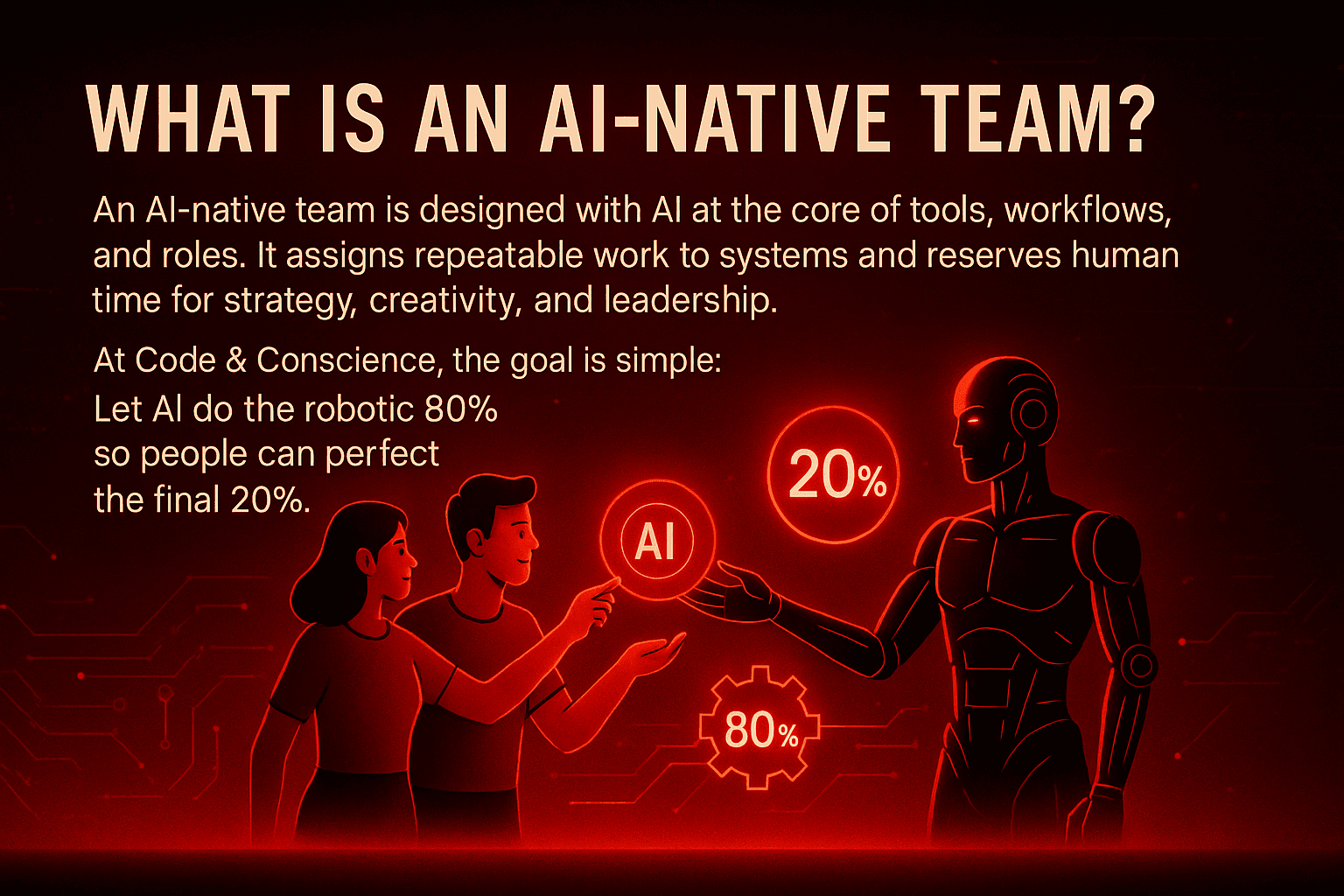
An AI-native team is designed with AI at the core of tools, workflows, and roles. It does not bolt a chatbot onto yesterday’s process. It assigns repeatable work to systems and reserves human time for strategy, creativity, and leadership. At Code & Conscience, the goal is simple. Let AI do the robotic 80% so people can perfect the final 20%.
Four traits that matter
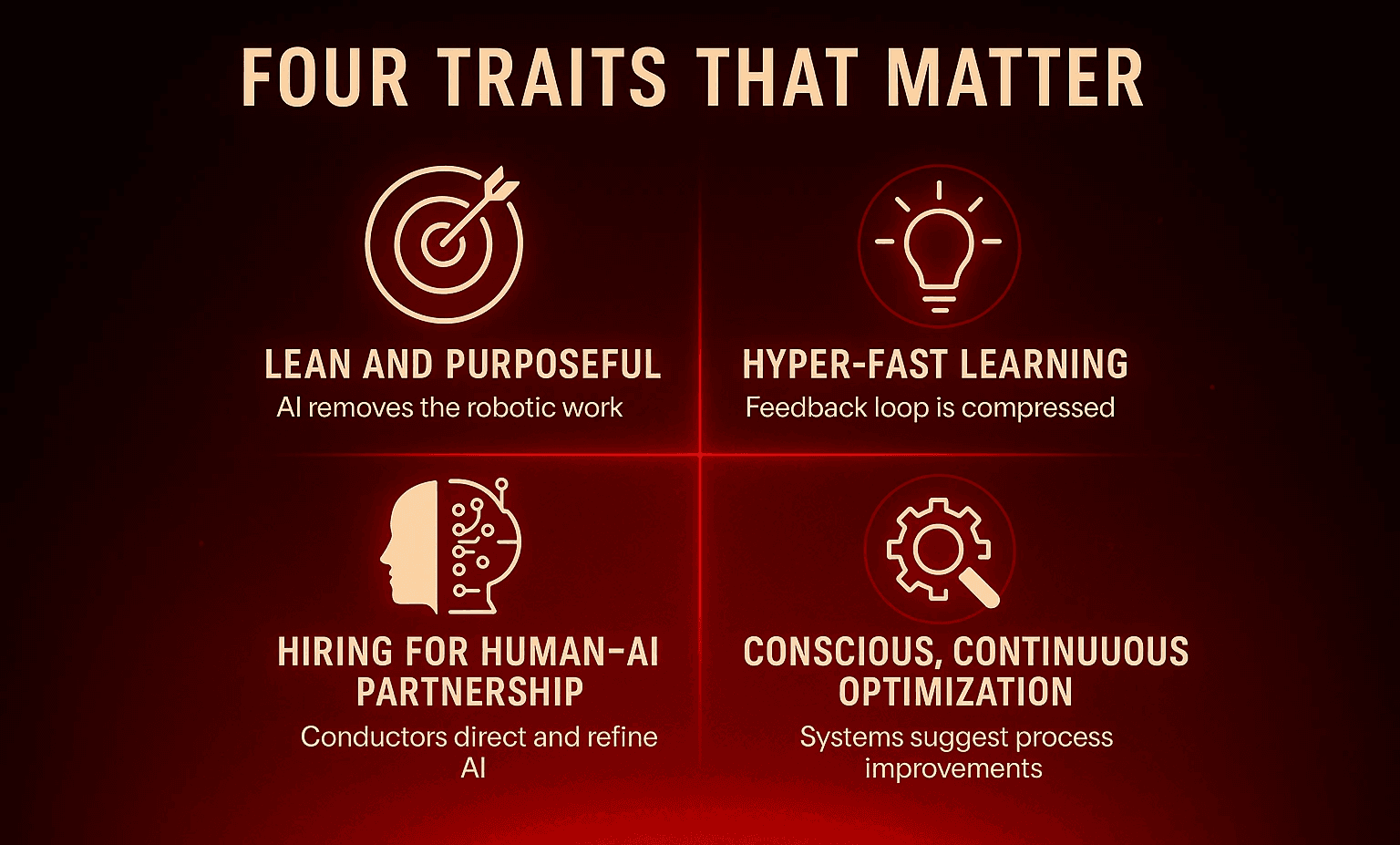
1) Lean and purposeful
The aim is not headcount cuts. It is removal of robotic work. AI handles data entry, reporting, and repetitive analysis. People focus on direction and quality.
Example
Old way, 5-person content team: strategist, writer, SEO, social manager, analyst, each doing manual, siloed tasks.
AI-native way, 2-person team: an AI-assisted strategist and a growth marketer drive research, drafting, optimization, and live dashboards. They spend their time on insight and brand.
2) Hyper-fast learning
AI compresses the feedback loop from weeks to hours. Teams test, analyze, and iterate quickly. The speed gain compounds because every cycle starts from richer context.
3) Hiring for human–AI partnership
The top skill is not only coding. It is directing AI effectively. AI-native teams hire conductors who can prompt, critique, and refine system output to consistent quality.
4) Conscious, continuous optimization
AI surfaces workflow improvements in the background. People avoid burnout because systems catch toil and suggest changes. The culture prizes sustainability and adaptation over grind.
Why build an AI-native team now
Purpose lifts performance by freeing people from drudgery
Speed becomes a byproduct, with 2–5× cycle gains common in pilots
Growth scales without burning budgets or teams
This is the Code & Conscience approach: use technology to build better businesses and better jobs.
Getting started: first steps
Start with empathy: Identify repetitive, frustrating tasks. Ask where human talent is being wasted.
Empower a pilot team: Let a small, forward-thinking group experiment and report evidence weekly.
Appoint an AI guide: A hands-on lead who teaches prompting, curates tools, and sets quality bars.
Shift the mindset: Treat AI like a junior collaborator. It drafts at volume. Your team polishes to standard.
About Code & Conscience
We help companies design and run AI-native teams that ship fast, stay agile, and keep people at the center. Learn more about our approach ›
❓ Frequently Asked Questions (FAQs)
Q1. What is an AI-native team in practice?
A1. It is a small, cross-functional group that embeds AI in daily work. Agents handle research synthesis, drafting, test generation, reporting, and routine ops. Humans own strategy, creative judgment, and final approval. Aim for AI to draft 80% and the team to polish the final 20% to a consistent standard.
Q2. How do we start without disrupting current delivery?
A2. Run a 4-week pilot in one lane. Pick a high-toil workflow such as content research, QA regression, or analytics reporting. Stand up 1–2 AI tools, define guardrails, and assign an “AI guide” to coach prompts and review outputs. Measure cycle time, quality, and hours saved, then scale what works.
Q3. Which metrics prove an AI-native approach is working?
A3. Track cycle time, deployment frequency, and time to insight. Add quality signals such as defect escape rate and edit rate on AI drafts. Include people metrics like hours saved per month and team satisfaction. Target improvements like 2–5× faster cycles, 30% fewer escaped defects, and a steady rise in satisfaction.